You Eat Seeds Every Day. But Are You Eating Them Right?
There is a jar of seeds in almost every health conscious kitchen today.
Flax. Chia. Pumpkin. Sunflower.
We sprinkle them over breakfast, carry roasted mixes to work, add them to salads and feel rather good about it.
But here is the interesting part… Eating a nutritious food and absorbing its nutrition are not always the same thing.
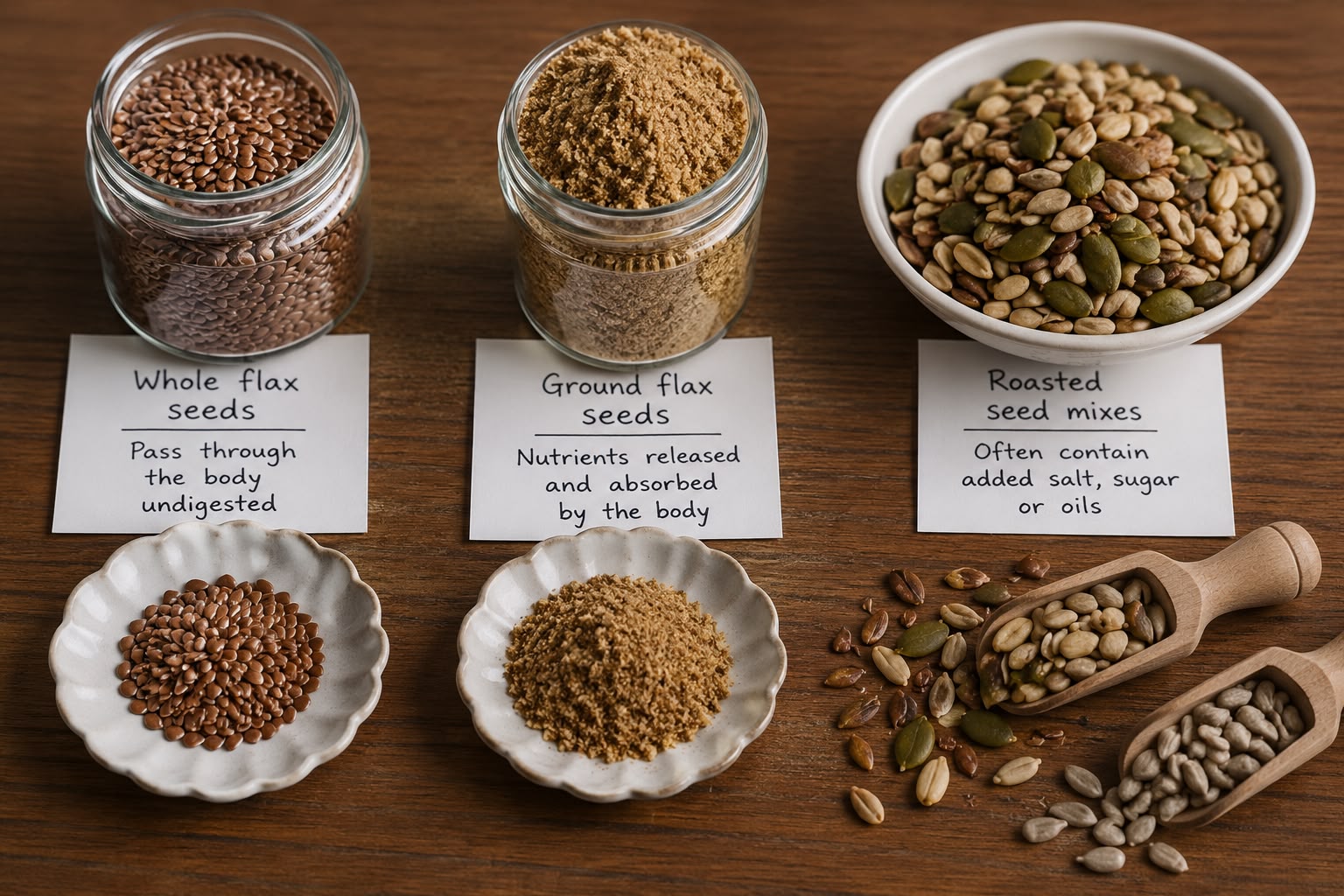
Take flaxseed.It is celebrated for its plant omega-3, fibre and lignans. But eat flaxseed whole...
Read More
You Eat Seeds Every Day. But Are You Eating Them Right?
There is a jar of seeds in almost every health conscious kitchen today.
Flax. Chia. Pumpkin. Sunflower.
We sprinkle them over breakfast, carry roasted mixes to work, add them to salads and feel rather good about it.
But here is the interesting part… Eating a nutritious food and absorbing its nutrition are not always the same thing.
Take flaxseed.
It is celebrated for its plant omega-3, fibre and lignans. But eat flaxseed whole, and its hard outer coat can survive digestion remarkably well. Some seeds may leave the body much the way they entered it.
Same seed. Same nutrition on paper. Very different nutrition in practice. Grinding flaxseed helps the body access what is locked inside.
And those innocent little seed mixes?
Sunflower seeds are roughly 580 calories per 100 g. Seeds are wonderfully nutrient-dense precisely because they are energy dense. “Healthy” never meant “unlimited.”
Then processing enters the picture.
A seed coated in salt, sugar or added oil doesn’t become unhealthy simply because it was roasted but neither does the word SUPERFOOD on the front erase what was added to it.
Perhaps the real question was never:
Which seeds should I eat?
It was:
Which seed? In what form? How much? And how has it been prepared?
That is where nutrition becomes interesting.
And increasingly, that is how we think about food at JAAPA too, not just what goes into a recipe, but what happens to that ingredient before it reaches you.
Read Less